



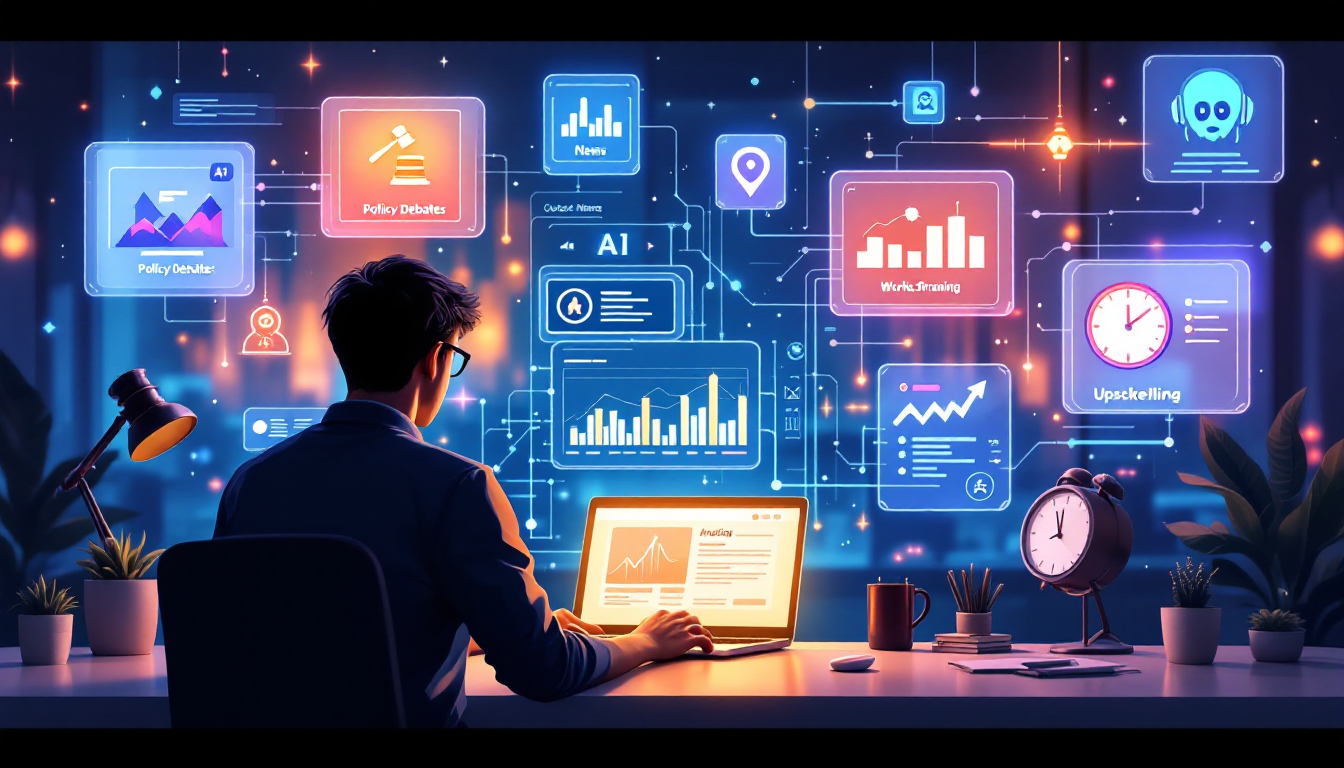
Policy, Skills, and Student Fears: AI’s Human Impact
December 20, 2025, saw heated debate over the White House’s AI czar David Sacks, whose push for federal preemption of state AI laws has drawn criticism from both industry and lawmakers. Politico reports that Sacks’s hardline tactics, including drafting an executive order when Congress stalled, have frustrated negotiators and may have undermined bipartisan momentum for compromise (source: Politico, Dec 20).
Meanwhile, workforce experts are focused on how AI is reshaping jobs. CBS News and leading economists note rising demand for “AI explainers” and “AI auditors”—roles dedicated to bridging technical and nontechnical teams, and ensuring models are fair and factual (source: CBS News, Dec 20). Those who can use, test, and communicate AI’s capabilities will be best positioned in the evolving job market.
On college campuses, a Dartmouth professor describes mounting anxiety among Gen Z students about AI’s impact on learning and humanity. A controversial MIT study on “your brain on ChatGPT” has fueled debate, with some arguing AI is a tool like the calculator, while others warn of eroding cognitive skills and identity (source: Fortune, Dec 20).
Startups report that AI is improving engineering workflows by speeding feedback and removing repetitive work, rather than replacing engineers outright (source: GeekWire, Dec 20).
AI’s Human Factor: Navigating Policy, Skills, and Wellbeing
The controversy around federal preemption of AI laws highlights the complex interplay between innovation, regulation, and local autonomy. As David Sacks’s approach sparks industry and legislative pushback, businesses must prepare for a patchwork of state and federal rules, and engage proactively with policymakers to shape sustainable AI governance. For organizations, compliance will require not just legal expertise, but also flexible technology platforms that can adapt as the regulatory landscape evolves.
The rise of “AI explainer” and “AI auditor” roles signals a new era in workforce development. As AI becomes more embedded in business operations, companies need professionals who can translate technical advances for diverse audiences and ensure ethical, unbiased deployment. Training, upskilling, and cross-disciplinary collaboration will be essential for success in the AI-powered workplace.
Student anxiety about AI’s influence on learning and identity reflects broader societal concerns. Educational institutions must balance the benefits of AI-assisted tools with strategies to foster critical thinking, creativity, and digital resilience. Open dialogue, guidance, and digital literacy programs can help students navigate the changing landscape.
For engineering and product teams, AI’s greatest value may lie in accelerating feedback cycles and eliminating tedious tasks. Rather than replacing talent, AI is poised to augment human expertise and free up time for innovation. Startups and enterprises alike should focus on integrating AI thoughtfully, prioritizing user experience and continuous learning.
For leaders and organizations, automation platforms such as CloneForce offer secure, adaptable solutions for deploying AI at scale. As the human side of automation comes to the fore, success will depend on empathy, adaptability, and a commitment to responsible innovation in every sector.


