



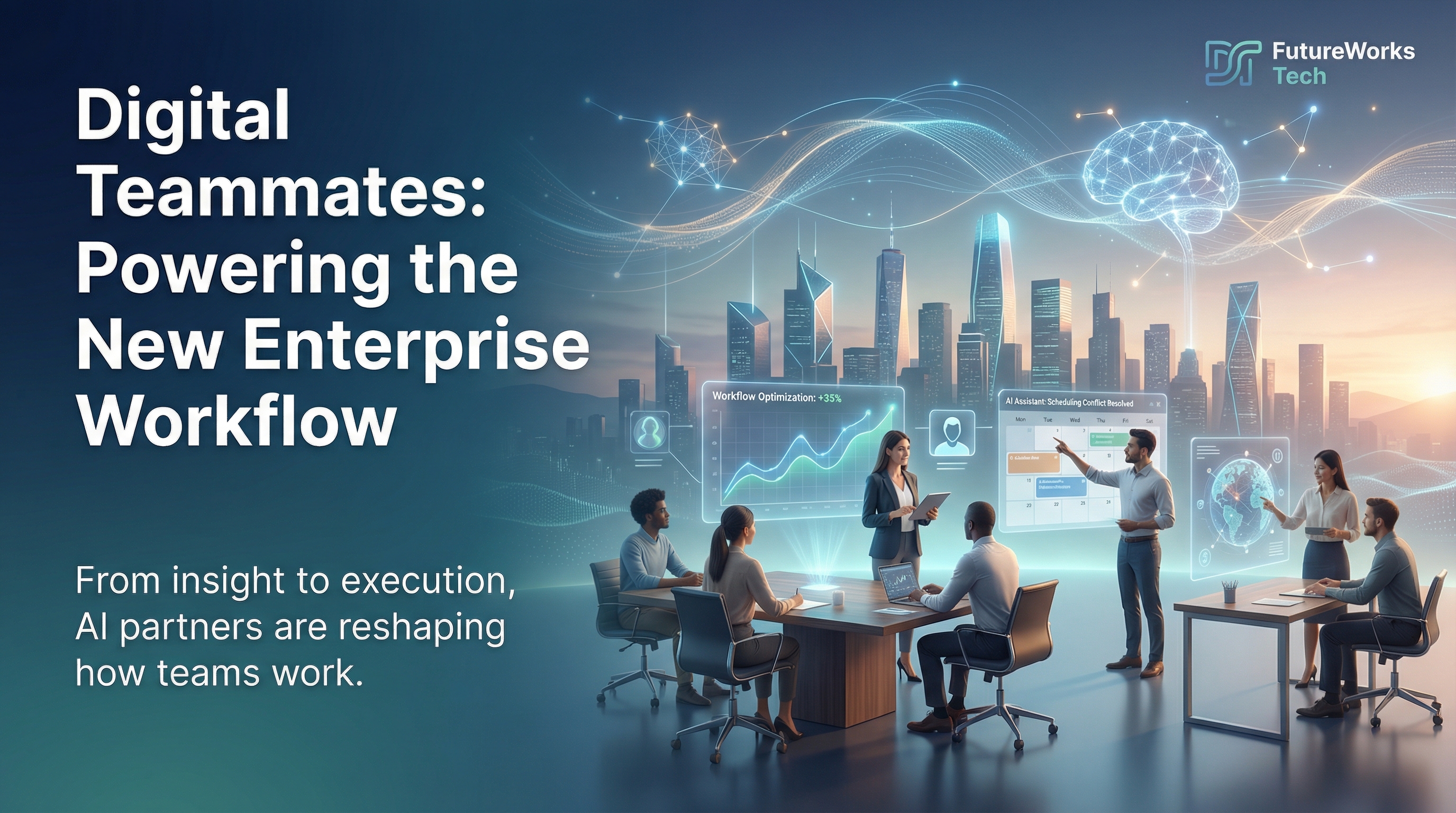
The concept of a Digital Teammate has quickly evolved from futuristic hype to practical reality. Recent stories highlight how AI-powered collaborators are now embedded in everyday workflows, unlocking new levels of productivity and creativity. According to the Pulse Blog from CloneForce, Digital Teammates like OpenAI’s ChatGPT Pulse and Gainsight’s Copilot are reshaping how teams plan, communicate, and act. These AI agents proactively surface insights, automate follow-ups, and help employees focus on creative problem-solving rather than repetitive tasks (Pulse Blog).
Meanwhile, WWT reports that AI agents are becoming the new Digital Teammates by automating the “operational overhead” that consumes much of our workweek (WWT). By handling scheduling, notifications, and routine communications, these agents free up time for strategic and human-centric work. Organizations embracing this shift are seeing higher output and a more engaged workforce.
Deloitte Insights, featured on ICDM, adds that successful human-AI collaboration requires more than just technology—it demands thoughtful strategies for upskilling, responsible design, and a reimagined HR approach (ICDM). As Digital Teammates become central to business operations, companies must foster a culture of collaboration and continuous learning.
The practical implications of Digital Teammates are far-reaching. Businesses adopting AI-powered collaborators report faster project timelines, improved onboarding, and enhanced customer engagement. For example, customer success teams using Gainsight’s Copilot can prepare for meetings with context-rich insights and automate follow-ups, ensuring no opportunity is missed. Community managers leverage AI to optimize member experiences, while product teams use Digital Teammates to synthesize feedback and prioritize features.
However, this transformation is not without challenges. Research from ICDM and Deloitte highlights the need for organizations to invest in digital literacy, change management, and responsible AI governance. Transparency, explainability, and user control are critical for building trust and driving adoption. There’s also a need to address the risks of isolation, monitoring, and identity concerns as humans and AI work more closely together.
Looking ahead, platforms like CloneForce (see CloneForce) are pioneering secure, scalable Digital Teammate solutions. The focus is shifting from mere automation for efficiency to augmentation for innovation—unlocking unprecedented productivity across industries. As AI capabilities continue to advance, organizations that champion AI + human collaboration will be best positioned to thrive in this new era.


