



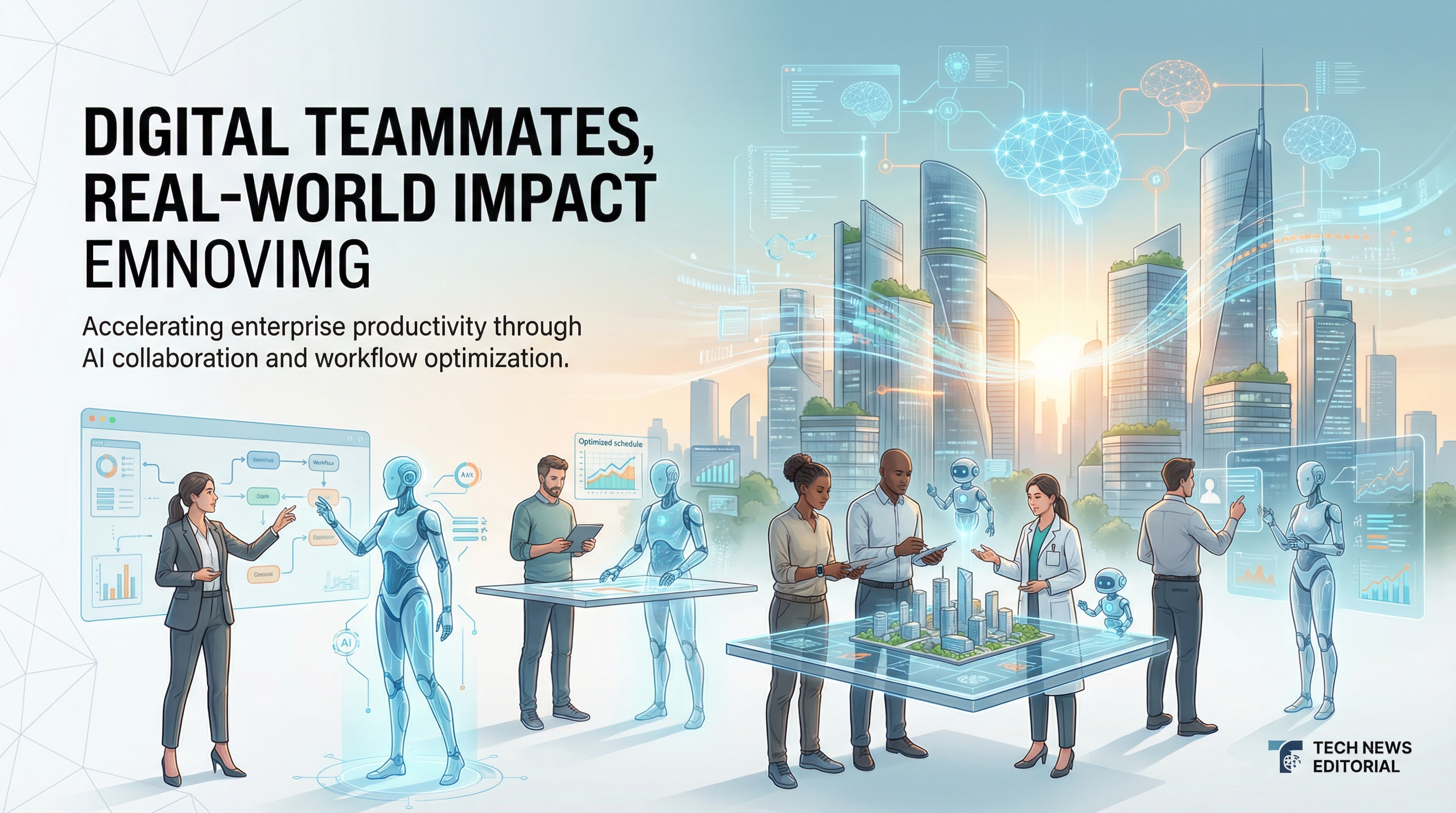
The workplace is undergoing a profound transformation as Digital Teammates—AI agents and intelligent automation platforms—move beyond hype to become indispensable partners in daily operations. No longer seen as mere tools, these AI-driven collaborators are being integrated as valued members of the workforce, fundamentally changing how teams operate and innovate.
According to Pulse by CloneForce, Secure.com’s Digital Security Teammate exemplifies this evolution. Acting as an embedded AI agent, it automates alert triage, incident response, and compliance tasks, saving over 2,000 analyst hours each year and dramatically reducing alert fatigue. Early adopters across finance, healthcare, and technology report up to 70% faster detection and 50% quicker resolution of security incidents, allowing human experts to focus on high-value work (Pulse by CloneForce).
The trend is echoed in the broader enterprise landscape. As highlighted in WWT’s recent analysis, AI agents are now seamlessly automating repetitive, low-value tasks—like scheduling, data entry, and information routing—freeing up employees for creative and strategic pursuits. These digital teammates integrate directly into existing workflows, accelerating productivity and enabling teams to focus on what truly matters (WWT).
Thought leaders are also advocating for a mindset shift. The “AI Persona Mindset,” as described by Digital Pulse, urges organizations to treat AI as a trusted colleague with a defined role, context, and feedback loop. This approach unlocks immediate value and ensures AI augments, rather than replaces, human expertise (Digital Pulse). Together, these stories demonstrate that Digital Teammates are not a futuristic promise—they are reshaping work right now.
The shift toward Digital Teammates is about more than efficiency; it’s about reimagining the very fabric of collaboration. By automating routine work, organizations empower their people to engage in higher-order problem-solving, creative innovation, and strategic decision-making. The result? More resilient, responsive, and motivated teams.
A key reason these developments matter is the growing complexity of modern work. As Secure.com’s success with Digital Security Teammates shows, AI can handle the relentless volume of alerts and compliance demands, providing full audit trails and escalating only when human judgment is needed. This not only improves operational resilience but also reduces burnout, enabling staff to focus on meaningful, high-impact initiatives (Pulse by CloneForce).
WWT’s research further reveals that AI agents are now accessible to non-technical users, integrating into familiar tools like email, chat, and business apps. This democratization of automation means that every employee—regardless of technical background—can benefit from a digital teammate. The practical impact is clear: less time lost to administrative overhead, more time invested in value creation (WWT).
Yet, successful adoption requires more than technology. As outlined in a popular LinkedIn article, leaders must actively champion human-AI collaboration, invest in employee upskilling, and establish robust change management frameworks. Treating AI as a “digital employee” involves onboarding, ongoing performance management, and even ethical off-boarding, ensuring that AI augments the workforce in a transparent and accountable manner (LinkedIn).
Looking ahead, the future of Digital Teammates is one of deeper integration, context-awareness, and trust. Platforms like CloneForce are leading this charge, offering secure, scalable solutions that fit naturally into enterprise workflows and respect privacy and data boundaries. As AI matures, the focus will shift from automation for efficiency to augmentation for creativity, innovation, and meaningful human connection. The organizations that embrace this evolution will not only outperform their peers—they will redefine the future of teamwork (CloneForce).


