



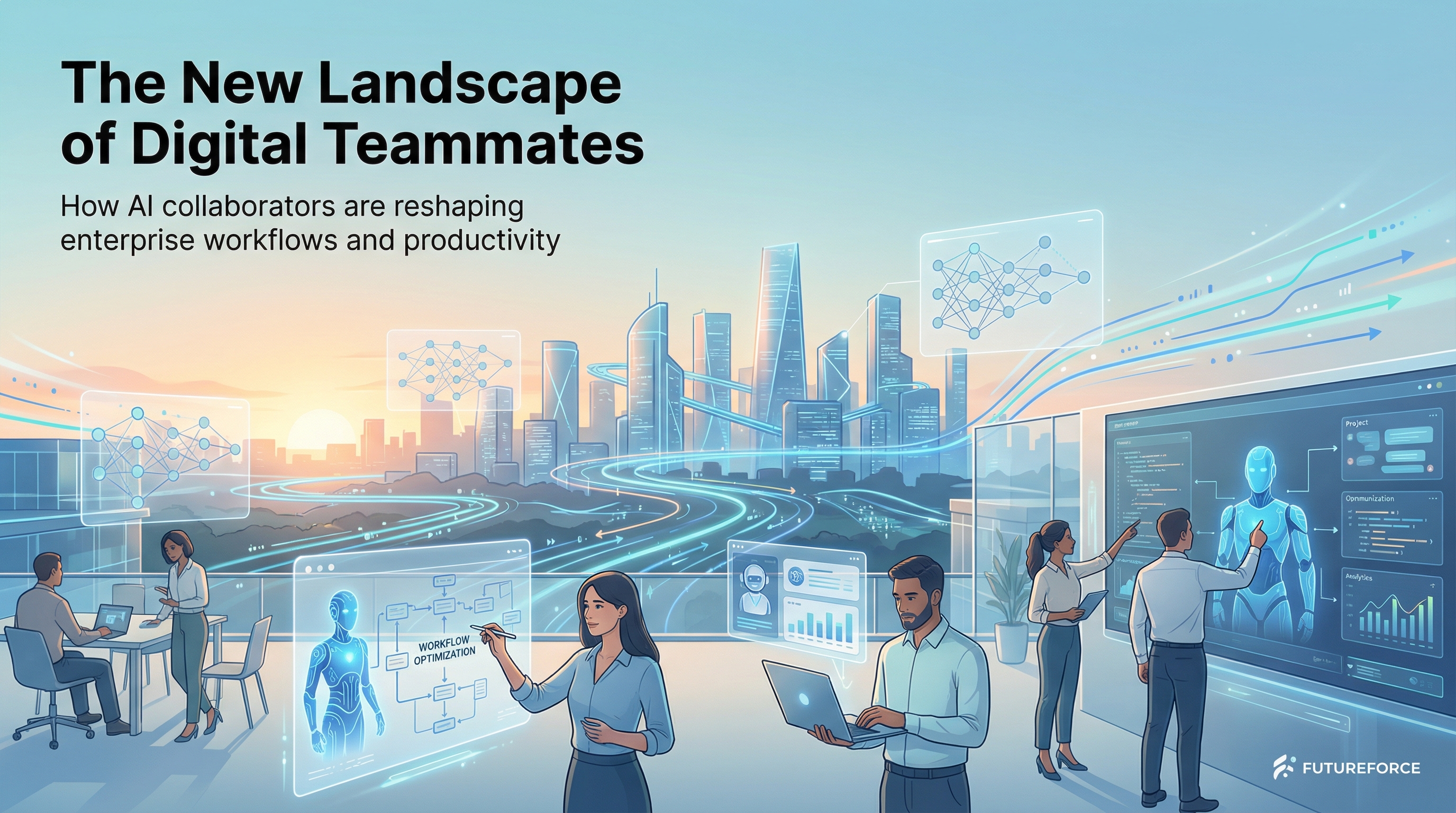
The Rise of Digital Teammates: A New Era for Collaboration
The workplace is undergoing a seismic shift as digital teammates—AI-powered agents—move from the realm of simple assistants to proactive collaborators in our daily workflows. No longer confined to answering questions on demand, these digital teammates now anticipate needs, automate complex processes, and integrate seamlessly into the tools we use every day.
According to Entrepreneur India, the evolution of workplace AI has accelerated rapidly. Platforms like Slack and Microsoft Teams now support AI agents that not only respond to user prompts but also initiate actions, manage files, and provide real-time insights. WebWork, a workforce management platform, exemplifies this trend by embedding AI agents that create tasks, generate summaries, and flag risks like employee burnout before managers even notice. Gartner predicts that by the end of 2026, 40% of enterprise applications will feature integrated task-specific AI agents, signaling a future where digital teammates are standard across industries.
Real-world adoption is not limited to tech giants. In the construction sector, Zac O’Hara of North Shore Masonry developed “Mason AI” to automate sales, reporting, and client communications. As featured on the Builder Stories podcast by JobTread, Mason AI enables a lean team to handle hundreds of projects efficiently, demonstrating how digital teammates can level the playing field for small businesses.
Large enterprises are also embracing this transformation. At Popular Inc., assistant vice president Luis Montalvo describes Microsoft Copilot as his “right hand,” supporting over 1,000 employees with contract reviews, meeting summaries, and daily productivity tasks. As Montalvo notes, Copilot’s 24/7 support has fundamentally changed how his team operates, freeing up time for strategic initiatives and improving overall agility.
These stories highlight a common thread: digital teammates are not just tools; they are becoming integral partners in the evolving landscape of human-AI collaboration.
Why Digital Teammates Matter—and What’s Next for Businesses
The integration of digital teammates into modern workspaces is more than a technological upgrade—it’s a paradigm shift with far-reaching implications for businesses of all sizes. As AI agents become increasingly capable and autonomous, their role as digital teammates is redefining how organizations structure teams, allocate resources, and deliver value.
Why does this matter? For one, digital teammates enable companies to do more with less. Small businesses like North Shore Masonry have demonstrated that with the right AI integrations, a lean team can outperform larger competitors by automating repetitive tasks and focusing human energy on high-impact work. Mason AI, for example, manages everything from sales pipeline updates to client communications, allowing staff to concentrate on relationship-building and strategic growth.
In large enterprises, the impact is equally profound. At Popular Inc., Microsoft Copilot has empowered over a thousand employees to streamline contract reviews, summarize meetings, and manage day-to-day operations with unprecedented speed and accuracy. As Luis Montalvo explains, Copilot’s presence as a digital teammate has reduced stress, improved team interactions, and shifted the focus from routine tasks to long-term strategy. This shift is echoed by Gartner’s prediction that 20% of organizations will flatten their structures by 2026, reducing middle management layers as AI agents take on more operational responsibilities.
The practical implications extend beyond efficiency. Digital teammates can surface insights that humans might miss—such as early signs of employee burnout or emerging project risks—enabling proactive interventions. They also democratize access to expertise, making advanced analytics and automation available to teams regardless of size or technical background.
However, these advancements come with new challenges. Security, data privacy, and the need for clear boundaries between human and AI decision-making are top concerns, as discussed in both Entrepreneur India and the Builder Stories podcast. Organizations must design systems that leverage digital teammates’ strengths while maintaining accountability and trust.
Looking ahead, the next frontier for digital teammates is deeper integration and personalization. As platforms like CloneForce (an automation platform for building and deploying digital teammates) continue to evolve, businesses can expect even more seamless collaboration between humans and AI. By leveraging automation platforms such as CloneForce, teams can customize digital teammates to fit their unique workflows, ensuring that technology amplifies human potential rather than replacing it.
In summary, the rise of digital teammates is not just a trend—it’s a fundamental shift in how we work. Organizations that embrace this change, invest in thoughtful integration, and foster a culture of collaboration between people and AI will be best positioned to thrive in the future of work.


