



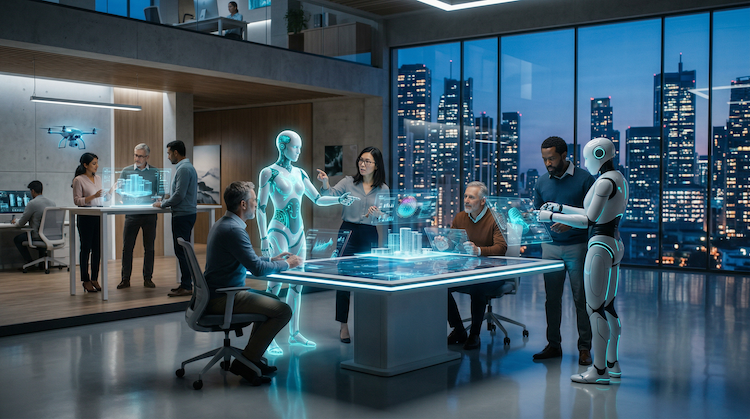
The concept of a “Digital Teammate” has rapidly evolved from a futuristic vision to a present-day reality. Across industries, organizations are embracing AI-powered partners that work alongside humans, amplifying strengths and unlocking new opportunities for growth.
One compelling example comes from Liza Adams, who describes building her own digital twin, “LizaGPT,” to act as a strategic partner rather than a simple automation tool. According to Adams, digital teammates are most effective when trained to think, analyze, and challenge like a human colleague, rather than just mimic tasks. This approach is gaining traction, with organizations scaling teams that blend human and AI members to achieve more consistent, high-quality results (LinkedIn).
In the realm of incident response, Relevance AI demonstrates how digital teammates are revolutionizing system monitoring and crisis management. Their AI agents work tirelessly to detect anomalies, analyze data, and resolve issues in real time, freeing up human experts to focus on complex problem-solving. The result is a more resilient, responsive organization that can adapt quickly to challenges and minimize downtime (Relevance AI).
Meanwhile, businesses focused on digital marketing and SEO are turning to AI-driven content strategies. As highlighted by Pop The Pixel, digital teammates now analyze trends, personalize content, and optimize for search intent, ensuring that human creativity is supported by actionable insights and real-time data. This shift marks a departure from traditional keyword-stuffing, emphasizing collaboration between humans and digital teammates to deliver more relevant, engaging content (Pop The Pixel).
As these stories show, Digital Teammates are not just tools—they are partners in innovation, shaping the future of work across sectors.
The integration of Digital Teammates into the modern workplace is more than a technological upgrade; it’s a strategic shift with far-reaching implications. These AI-powered partners are enabling businesses to move beyond routine automation, driving efficiency, resilience, and creativity through true collaboration.
One of the most significant advantages of Digital Teammates is their ability to process and analyze vast amounts of data in real time. In high-stakes environments like fintech and e-commerce, this means faster incident response, predictive insights, and a dramatic reduction in downtime. According to Relevance AI, organizations that deploy digital teammates for incident response have seen improvements in both speed and accuracy, allowing human experts to focus on strategic decision-making rather than repetitive triage (Relevance AI).
But the impact extends far beyond IT. In marketing and customer engagement, Digital Teammates are transforming how brands connect with their audiences. AI-driven teammates help craft personalized content, optimize campaigns, and surface actionable insights that empower human marketers to be more creative and responsive. As Pop The Pixel notes, the key to competitive advantage now lies in blending human intuition with AI-powered analysis, making digital teammates indispensable for businesses focused on growth and innovation (Pop The Pixel).
Perhaps most transformative is the potential for Digital Teammates to amplify human strengths. As Liza Adams explains, the most effective AI partners are those trained to think, critique, and collaborate—not just execute commands. When organizations invest in building digital teammates that reflect their values and strategic priorities, they create a culture of continuous learning and improvement (LinkedIn).
Looking ahead, the outlook for Digital Teammates is bright. As AI technology evolves, we can expect even deeper integration, with digital teammates taking on specialized roles across departments—from operations and finance to HR and product development. The organizations that thrive will be those that view AI as a trusted collaborator, not just a tool.
Platforms like CloneForce are at the forefront of this movement, enabling organizations to build, deploy, and manage digital teammates tailored to their unique needs. By combining robust automation capabilities with a focus on human-centric design, automation platforms such as CloneForce are setting the standard for the next generation of AI + Human Collaboration.
In summary, the rise of Digital Teammates signals a new era in the world of work—one where human ingenuity and AI-powered efficiency go hand in hand. Businesses that embrace this partnership will be better equipped to innovate, adapt, and lead in an increasingly complex world.


