



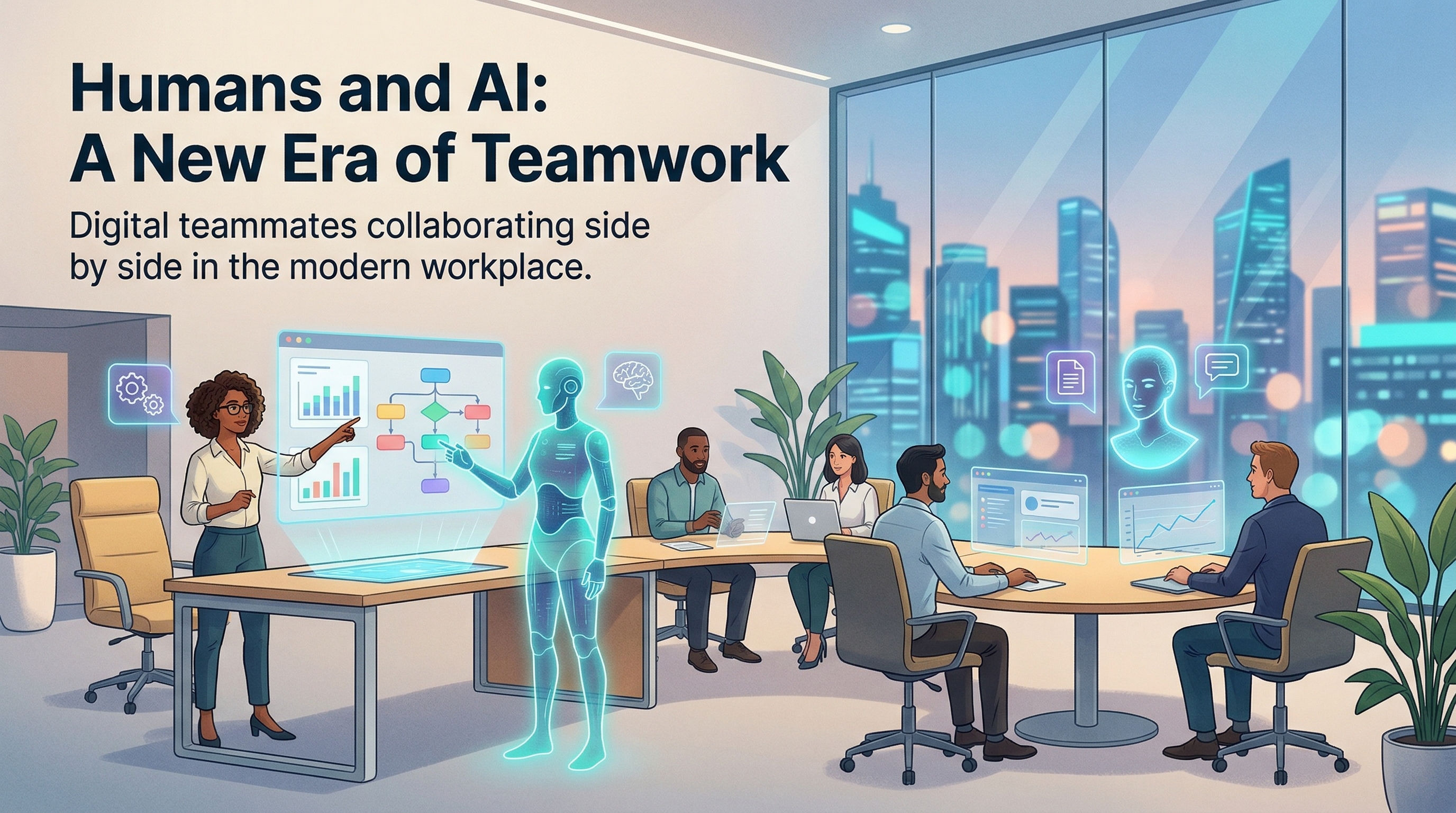
In 2026, the concept of a “digital teammate” has taken center stage in conversations about the future of work. No longer confined to simple automation, AI systems are actively collaborating with human professionals, driving a new era of productivity and innovation across industries.
According to DH Insights, the rapid adoption of AI as a digital teammate in healthcare has brought about significant efficiency gains, especially in areas like clinical documentation and operational workflows. However, this transformation is not without its challenges. As organizations reap the benefits of AI-driven automation, they must also navigate complex issues around data privacy, governance, and cybersecurity. The article underscores the importance of robust oversight and clear policies to ensure that the advantages of digital teammates are not overshadowed by unintended risks.
Meanwhile, in the marketing world, Impact on Net reports that 2025 marked a critical turning point. AI began evolving from a passive tool into a true collaborator, supporting teams not just with data analysis, but also with creative tasks and personalized customer engagement. Anand Jain of CleverTap describes how autonomous AI agents are now capable of handling tasks that once required specialized human teams, enabling hyper-personalization and democratizing access to advanced analytics.
These developments are not limited to a single sector. As Scott MacFarland highlights on LinkedIn, digital teammates are increasingly being adopted in fields like real estate, where they automate routine, information-heavy tasks, freeing up professionals to focus on relationship-building and complex decision-making. The shift to human–AI teams is less about replacement and more about augmentation, empowering workers to achieve more by leveraging the unique strengths of both people and intelligent systems.
The emergence of digital teammates signals a fundamental shift in how organizations approach work. By moving beyond traditional automation, businesses are now harnessing AI as collaborative partners that can understand context, make recommendations, and even execute complex workflows. This evolution matters for several reasons.
First, the practical impact on productivity is profound. As noted by DH Insights, industries like healthcare are seeing measurable improvements in efficiency and accuracy, with AI teammates handling repetitive documentation and administrative tasks. This allows skilled professionals to focus on higher-value activities, such as patient care or strategic planning. However, the same article also cautions that rapid AI adoption can outpace organizational readiness, making governance and cybersecurity essential priorities. Without clear policies and regular training, the risks of data breaches and compliance failures increase, especially as “shadow AI” tools proliferate outside official channels.
Second, the democratization of advanced capabilities is leveling the playing field for businesses of all sizes. Impact on Net’s coverage of the marketing sector illustrates how AI agents are enabling hyper-personalization at scale, allowing even small teams to deliver tailored experiences that were once the domain of large enterprises. As AI systems become more adept at interpreting brand tone and cultural nuance, creative output is poised to become both more authentic and more efficient. The traditional advantage held by organizations with deep resources and specialized talent is eroding, replaced by a new era of accessible intelligence and creative direction.
Third, the augmentation model described by Scott MacFarland offers a blueprint for sustainable human–AI collaboration. Rather than fearing job loss, professionals are learning to work alongside digital teammates that handle preparation, research, and memory-intensive tasks. This partnership enables faster, more consistent responses and reduces mental load, allowing humans to focus on judgment, empathy, and innovation. For business leaders, the decision to integrate digital teammates is not just about technology adoption—it’s an investment in operational maturity and future resilience.
Looking ahead, platforms like CloneForce are positioned to play a pivotal role in this transformation. By offering automation platforms such as CloneForce, organizations can deploy digital teammates tailored to their unique workflows and compliance needs. The outlook for 2026 and beyond is clear: businesses that proactively embrace digital teammates—while prioritizing governance and security—will unlock new levels of agility, creativity, and competitive advantage.
As AI capabilities continue to advance, the most successful organizations will be those that foster a culture of collaboration between humans and digital teammates. The future of work is not about choosing between people and machines, but about designing teams that harness the strengths of both to achieve extraordinary results.


