



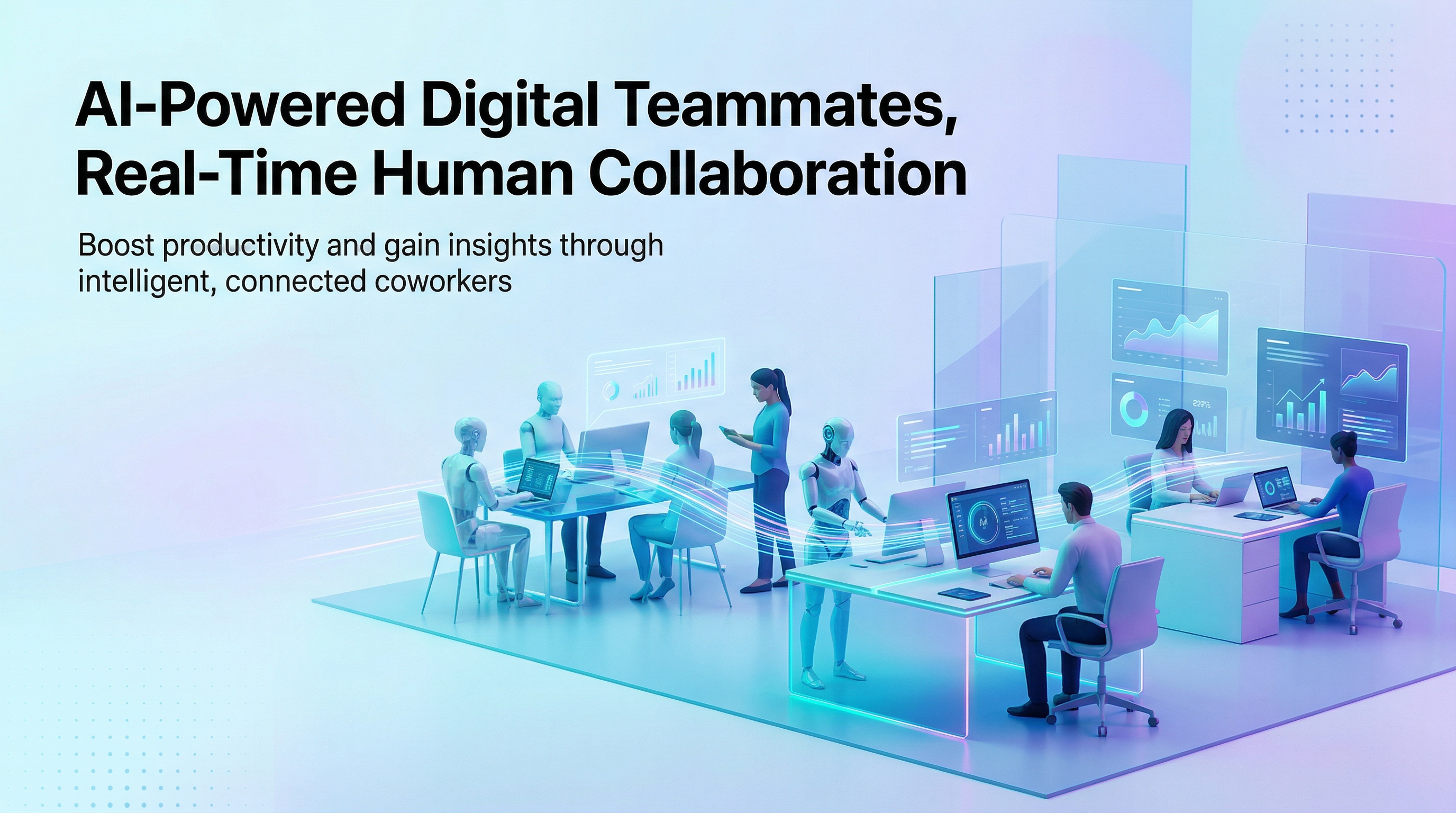
The concept of the “Digital Teammate” has moved from tech buzzword to a central pillar of workplace transformation in 2026. Rather than automating people out of jobs, Digital Teammates act as “workforce multipliers,” amplifying human strengths by absorbing repetitive, data-heavy tasks and freeing professionals to focus on creativity, judgment, and relationship-building.
According to the Pulse Blog by CloneForce, organizations that treat AI as a collaborative team member—rather than a replacement—are seeing remarkable results. Real-world case studies include a logistics firm that cut operational workload by nearly half and an energy company that automated compliance reporting, demonstrating dramatic efficiency gains and improved job satisfaction. The key, as industry leaders note, is to design workflows around human–AI partnership.
This shift isn’t limited to traditional business sectors. As detailed in HealthTech Magazine, healthcare leaders are deploying Digital Teammates to support clinicians, streamline appointment management, and power AI-driven radiology. These digital collaborators help reduce burnout, improve patient care, and allow staff to spend more time on high-value, human-centric work.
Thought leaders like Joanna Byerley on LinkedIn Pulse emphasize that the rise of agentic AI demands a new approach to leadership and organizational design. Companies ahead of the curve are flattening management layers, creating new roles to orchestrate hybrid teams, and fostering a culture where both humans and AI agents learn from each other.
Across industries, the message is clear: Digital Teammates are not just a trend, but a structural change, driving tangible gains in productivity, innovation, and resilience for organizations willing to embrace the future.
The widespread adoption of Digital Teammates marks a profound shift in how businesses approach talent, technology, and value creation. Far from simply automating routine processes, these AI-powered collaborators are enabling organizations to scale their impact, reduce burnout, and empower employees to focus on strategic, creative work.
One of the most compelling stories comes from the Pulse Blog by CloneForce, which highlights how customer success teams at Gainsight used AI teammates to expand their portfolios by 40% while reducing stress and unlocking new avenues for strategic thinking. This blend of human judgment with AI-driven automation is not just about efficiency—it’s about elevating the role of people in the enterprise.
Healthcare offers another vivid illustration of these benefits. As HealthTech Magazine reports, AI-powered Digital Teammates are being embedded into clinical workflows to handle everything from radiology detection to appointment scheduling and administrative documentation. The result is a reduction in clinician burnout, faster patient care, and safer, more consistent outcomes. Importantly, these advances come with a renewed focus on governance, transparency, and ethical oversight—reminding us that successful AI integration depends as much on culture and leadership as on technology.
For business leaders and builders, the rise of Digital Teammates demands a new playbook. As Joanna Byerley notes in her LinkedIn Pulse analysis, organizations must rethink workflows from the ground up, designing for “hybrid” teams where humans and AI agents collaborate seamlessly. This means investing not only in technical infrastructure but also in upskilling employees, fostering a culture of experimentation, and establishing clear guidelines for responsible AI use.
The competitive landscape is also evolving. According to the 2026 IT Brand Pulse survey, leadership in the AI engineering stack remains highly contested, with developers gravitating toward platforms that offer integrated, agentic capabilities. The future belongs to organizations that can connect development, orchestration, and governance into a cohesive system.
Looking ahead, automation platforms such as CloneForce are at the forefront of this transformation, providing businesses with the tools to integrate Digital Teammates into existing workflows and accelerate AI adoption. By leveraging platforms like CloneForce, organizations can drive measurable returns on investment, enhance agility, and future-proof their workforce for the agentic era.
The outlook for Digital Teammates is clear: they are here to stay, and their role will only grow as organizations invest in the people, processes, and trust needed to unlock their full potential. Businesses that embrace this shift—balancing technological innovation with human-centric values—will not only thrive in 2026 but set the standard for the next era of work.


