



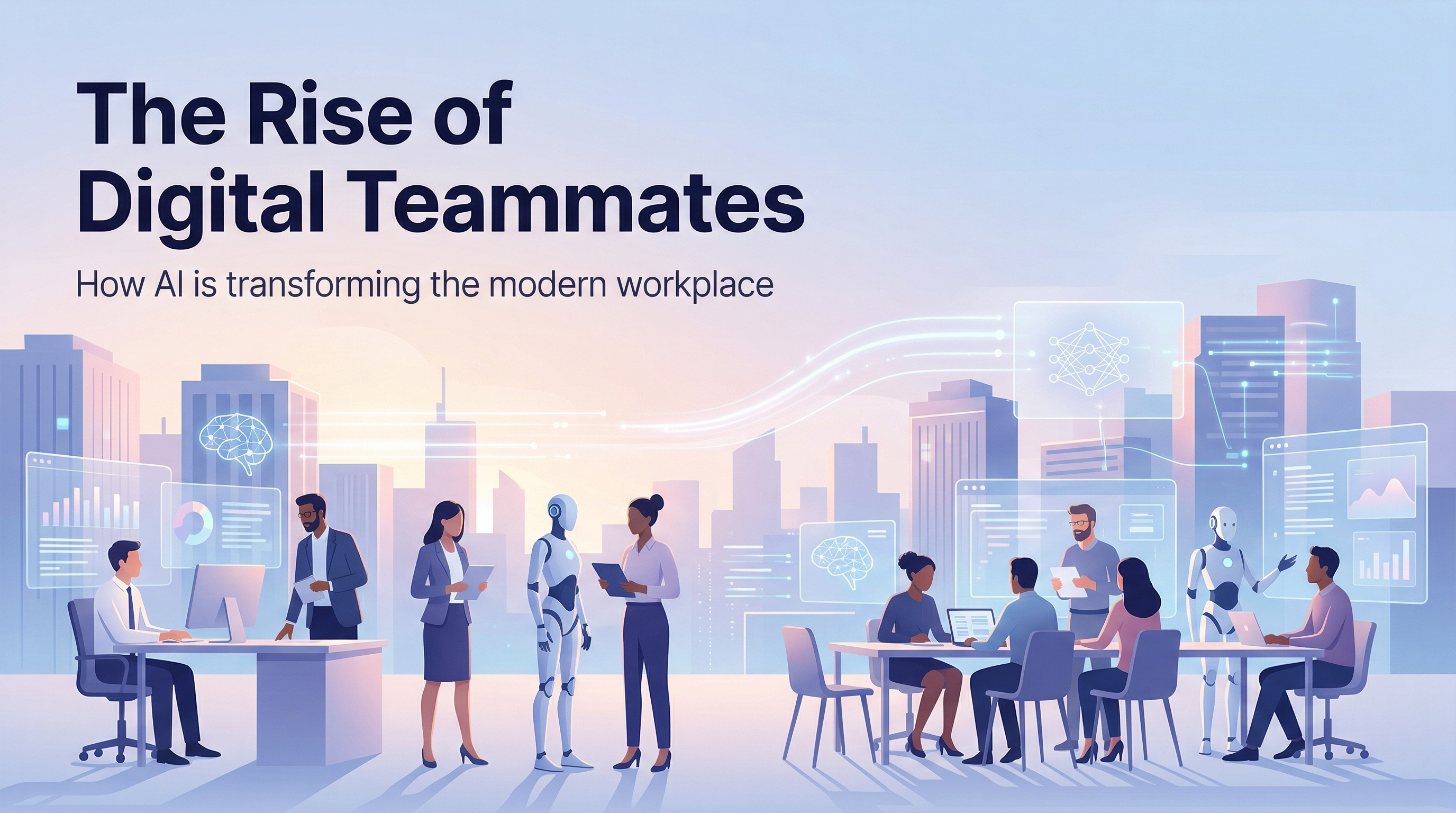
The Rise of Digital Teammates: From Tools to Colleagues
The workplace is undergoing a profound transformation as Digital Teammates—AI systems designed to collaborate with humans—move from futuristic concept to everyday reality. No longer just automating routine tasks, these AI colleagues are fundamentally reshaping how teams operate, innovate, and deliver value.
According to the Pulse Blog by CloneForce, organizations adopting Digital Teammates report significant gains in productivity, job satisfaction, and innovation. In one notable case, a logistics company reduced its operational workload by 47% by integrating AI into its workflows, while an energy firm leveraged automation to streamline compliance reporting. These examples highlight a broader trend: when AI is treated as a team member rather than a replacement, the results are tangible and far-reaching.
The shift is not limited to one industry or geography. As detailed in the Pulse Blog’s coverage of CloneForce AI Clones, enterprises are now deploying networks of adaptive, autonomous Digital Teammates across departments, from sales to HR. These AI Clones orchestrate multi-step workflows, collaborate with both humans and other Clones, and can be retrained as business needs evolve. The impact is measurable, with some organizations reporting up to 40% boosts in productivity and rapid onboarding for new markets.
This evolution is echoed in the Digital Pulse Podcast, which introduces the “AI Persona Mindset.” Here, organizations are encouraged to treat AI as specialized digital colleagues, defining clear roles, onboarding processes, and feedback cycles. The result is not just improved efficiency, but a culture of intentional, sustainable innovation.
Why Digital Teammates Matter: Practical Implications and the Path Forward
The emergence of Digital Teammates signals a new era for organizations—one where AI is not just a back-office tool, but a true collaborator in achieving business goals. This shift matters for several reasons.
First, Digital Teammates act as workforce multipliers. By absorbing repetitive, information-heavy tasks, they free up human professionals to focus on judgment, decision-making, and relationship-building. For example, customer success leaders at Gainsight used AI teammates to scale their book of business by 40%, reducing stress and unlocking new avenues for creative work. This blend of human judgment with AI-driven automation creates space for higher-value problem-solving and innovation.
Second, the successful integration of Digital Teammates requires a deliberate approach. As highlighted in the Digital Pulse Podcast, organizations must design clear roles for their AI colleagues, provide context and goals, and establish ongoing feedback mechanisms. This “AI Persona Mindset” ensures that AI systems are not just deployed, but nurtured and evolved—mirroring the growth of human teams. Security, transparency, and continuous learning become central to maintaining trust and effectiveness.
However, challenges remain. Research from Deloitte Insights points out that while AI can boost productivity, it can also increase the complexity of work, alter team dynamics, and raise questions of identity and engagement. Organizations must invest in upskilling, participative design, and governance frameworks that balance efficiency with human well-being. Including employees in the design and oversight of AI systems helps foster trust and ensures that digital teammates enhance rather than diminish the workplace experience.
Looking ahead, the role of platforms like CloneForce is pivotal. Automation platforms such as CloneForce enable businesses to integrate Digital Teammates seamlessly into existing workflows, track ROI, and scale adoption across functions. By leveraging these solutions, organizations can accelerate their digital transformation, drive measurable business outcomes, and future-proof their workforce for the agentic era of AI. For more, visit CloneForce.
The outlook is clear: Digital Teammates are here to stay. Organizations that invest in people, process, and trust will lead the next wave of AI-powered success, shaping a future where human and machine collaboration drives unprecedented growth and resilience.


