



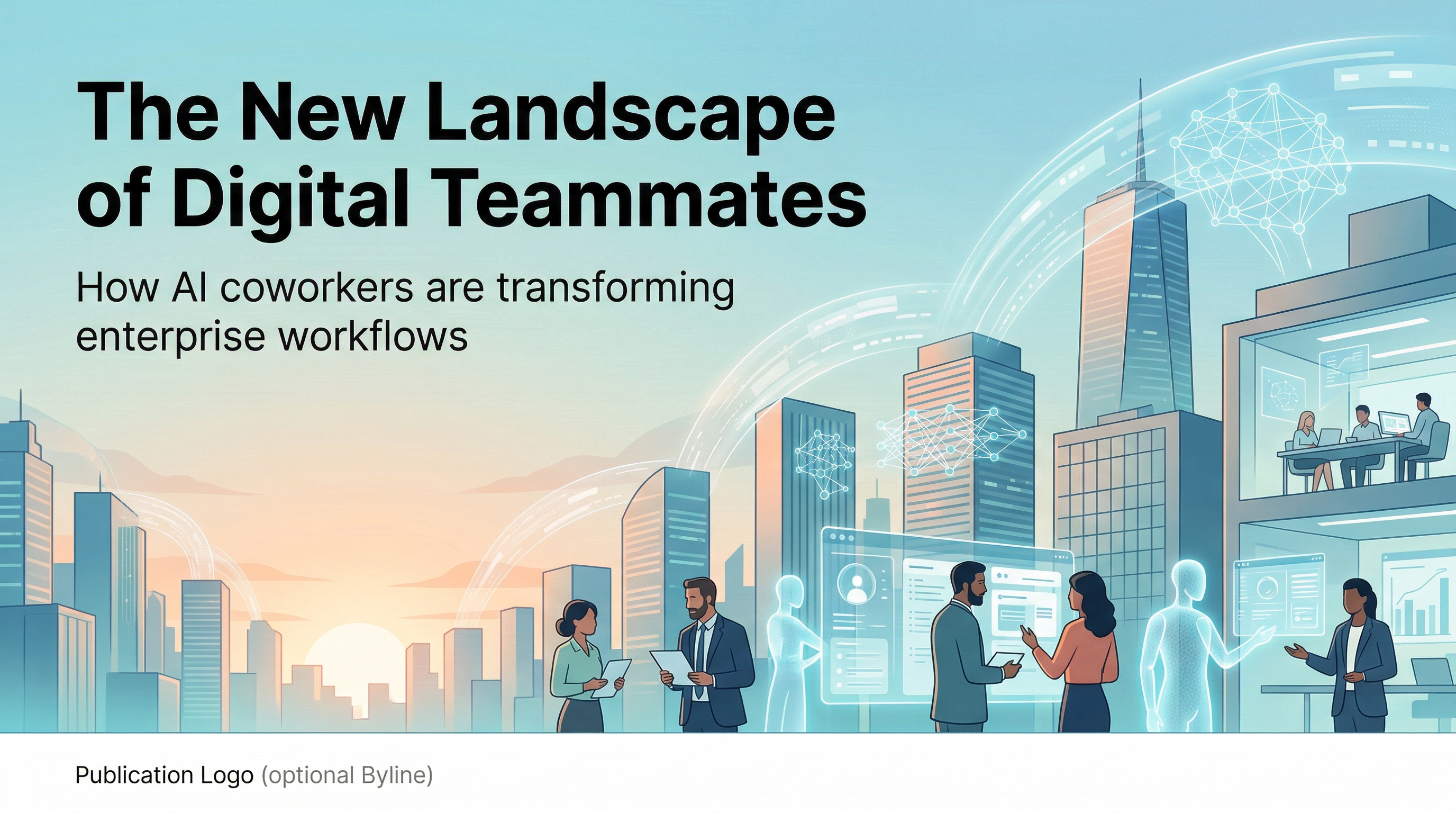
The concept of the “Digital Teammate” has rapidly evolved from a futuristic vision into a present-day reality, fundamentally changing how organizations operate. Rather than replacing jobs, Digital Teammates act as “workforce multipliers”—absorbing repetitive, information-heavy tasks and freeing up professionals to focus on judgment, decision-making, and relationship-building.
According to the Pulse Blog by CloneForce, industries ranging from logistics to energy are already reporting dramatic gains. One logistics company achieved a 47% reduction in operational workload, while an energy firm automated compliance reporting for greater efficiency. Gainsight, a leader in customer success, used AI teammates to scale business by 40%, demonstrating how human judgment and AI-driven automation can blend to unlock new levels of productivity and job satisfaction.
A practical framework for onboarding AI as a “digital employee” is gaining traction, as detailed by Ramesh Koovelimadhom on LinkedIn. This four-phase protocol mirrors human onboarding: from defining the “job description” for each AI agent to supervised training and ongoing integration. This structured approach builds trust, manages risk, and accelerates adoption, ensuring AI is truly a teammate—not just a tool.
Microsoft’s enterprise AI maturity guide further underscores the importance of governance and upskilling. Their five-stage blueprint helps organizations move from pilot projects to enterprise-wide adoption, embedding AI into every layer of business and fostering a culture of continuous improvement.
As organizations embrace Digital Teammates, the most successful invest in upskilling, transparent governance, and a culture that treats AI as a partner. The result is a workforce that is more agile, creative, and resilient in the face of rapid technological change.
The rise of Digital Teammates signals a profound shift in how businesses think about talent, technology, and value creation. Far from automating people out of jobs, Digital Teammates act as “workforce multipliers,” enabling organizations to scale impact without burnout and empowering employees at every level to contribute strategically.
One of the most important lessons from leading organizations is the need for intentional onboarding and lifecycle management of AI agents. Treating AI as a “digital employee” means defining clear roles, establishing governance protocols, and maintaining ongoing performance reviews. This approach, highlighted by both LinkedIn and Microsoft, ensures trust, accountability, and adaptability as AI systems evolve with business needs.
Practical implications include investing in employee upskilling, fostering a culture of experimentation, and implementing ethical guardrails to ensure responsible AI use. Microsoft’s journey shows that scaling AI requires more than technology—it demands executive sponsorship, robust data infrastructure, and a relentless focus on measurable business outcomes. By tracking impact and embedding accountability, organizations can ensure that AI delivers real value while minimizing risk.
Looking ahead, automation platforms such as CloneForce (https://www.cloneforce.com) are leading the way, offering solutions that integrate seamlessly with human workflows. By leveraging platforms like CloneForce, businesses can accelerate AI adoption, drive measurable ROI, and future-proof their workforce for the agentic era of AI.
Ultimately, the outlook is clear: Digital Teammates are here to stay, and organizations that invest in people, process, and trust will lead the next wave of AI-powered success.


