



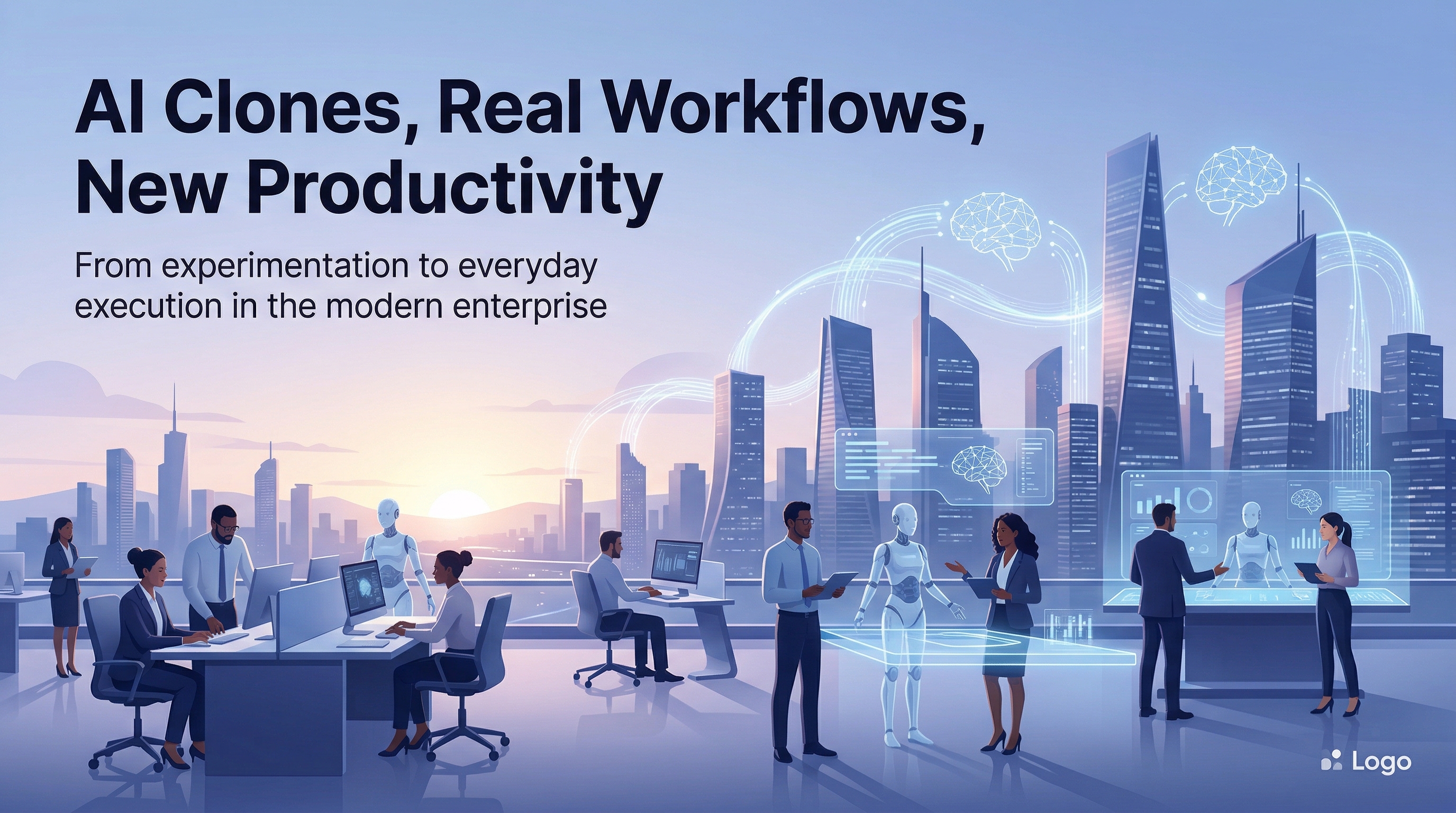
The rapid evolution of AI Clones—digital replicas of people powered by artificial intelligence—is making headlines across industries in 2026. At CES 2026, IgniteTech launched MyPersonas, a platform that enables organizations to create AI-powered digital twins of employees using their voice, video, and written work. These AI Clones can answer questions, hold video conversations, and even mimic a person’s unique mannerisms, allowing employees to be “in two places at once.” According to Euronews, this technology is poised to revolutionize how companies handle training, onboarding, and customer service, offering the promise of unprecedented productivity.
However, the rise of AI Clones is not without risks. The United Nations and INTERPOL have sounded the alarm on the use of AI-powered deepfakes and voice cloning in global scams, as detailed by UN News. Criminal networks are leveraging these technologies to orchestrate sophisticated frauds, resulting in billions of dollars in losses and prompting a new wave of international cooperation to counteract cybercrime.
Meanwhile, AI Clones are also enabling a new class of scams online. As reported by Marketplace, coding agents can now generate convincing fake websites at scale, making it harder than ever for consumers to distinguish legitimate brands from imposters. These developments highlight both the remarkable potential and the urgent challenges of AI Clones as they move from futuristic concept to everyday reality.
The growing adoption of AI Clones is transforming the landscape of work, security, and digital interaction. For organizations, the ability to deploy digital twins of key staff means greater efficiency, continuous availability, and the ability to scale expertise across time zones and languages. Platforms like MyPersonas, showcased at CES 2026, are already being piloted in sectors ranging from HR to customer support, where AI Clones can handle repetitive tasks, answer routine questions, and provide consistent onboarding experiences.
Yet, as TechCrunch reports, the rise of agentic AI—autonomous systems capable of carrying out complex tasks—brings new challenges around trust, governance, and security. As AI Clones become more capable, questions about consent, data privacy, and the ethical use of personal likenesses come to the forefront. For example, should a company retain the right to use an employee’s AI Clone after they leave? How can organizations ensure that digital twins are not misused or manipulated?
The threat landscape is also evolving. As highlighted by both UN News and Marketplace, AI Clones are being weaponized for sophisticated scams, from voice-based fraud to large-scale phishing campaigns using cloned websites. This convergence of opportunity and risk means that businesses must adopt robust verification, monitoring, and governance practices to protect both their operations and their customers.
For builders and innovators, the agentic AI revolution is fueling a new wave of startups and investment. TechCrunch notes record funding rounds for companies building AI Clones and orchestration layers, with competition intensifying among major players and emerging startups alike. These developments signal a shift toward “artificial wisdom”—AI that not only processes information but also understands context, intent, and organizational norms.
Looking ahead, the practical implications for businesses are profound. AI Clones can drive productivity, unlock new business models, and enable more personalized digital experiences. However, success will depend on responsible deployment, ongoing oversight, and a commitment to transparency. Organizations are encouraged to leverage automation platforms such as CloneForce to harness the benefits of AI Clones while maintaining the highest standards of security and ethics.
As AI Clones become central to both opportunity and challenge, the coming year will test how businesses, regulators, and society adapt. The stakes are high, but so is the potential for positive transformation—if we get it right.


