



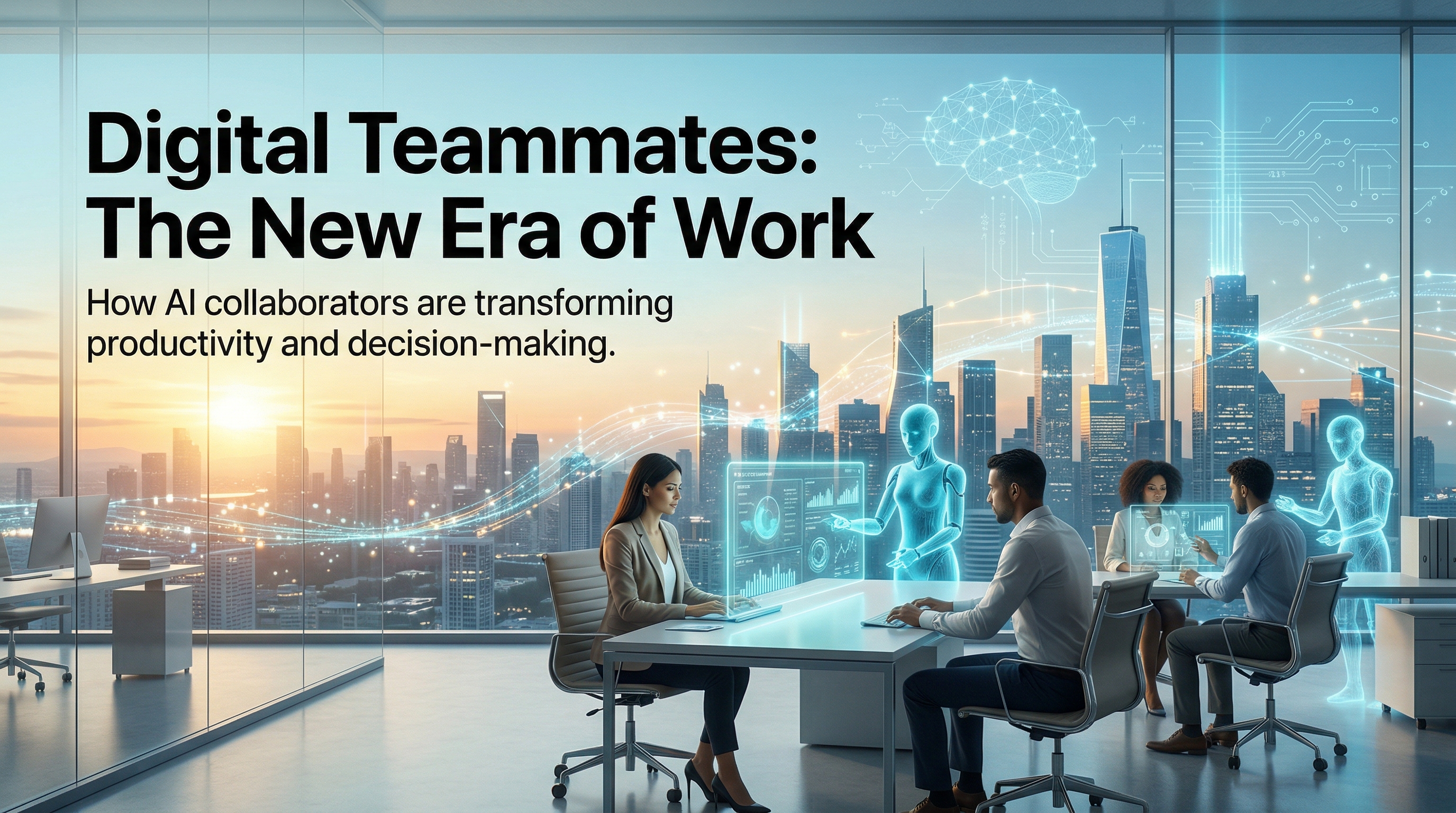
The rise of “digital teammates” is transforming the workplace in 2026, ushering in a new era of collaboration between humans and artificial intelligence. No longer viewed as mere replacements, AI systems are now strategic partners—augmenting human capabilities and driving higher productivity, innovation, and resilience.
According to Kreate Technologies’ analysis on LinkedIn, human–AI synergy is now the foundation of enterprise performance. Instead of automating everything, organizations are leveraging digital teammates to handle data-intensive, repetitive tasks, freeing employees to focus on creative problem-solving and strategic decision-making. Real-world examples abound: in the energy sector, AI continuously monitors infrastructure while humans review and approve critical actions; in professional services, AI drafts proposals and summarizes research, while experts contextualize and act on insights.
The Digital Workplace Group’s 2026 predictions echo these themes, highlighting the emergence of AI agents as true digital coworkers. These systems don’t just check off tasks—they co-author projects, maintain context, and amplify human strengths. The analogy to Ironman’s suit is apt: AI-powered tools anticipate needs, adapt in real time, and help teams thrive amid complexity. At the same time, the human element remains vital, ensuring that empathy, trust, and clarity are central to every collaboration.
This shift is not just technological—it’s cultural. Organizations that foster digital literacy, invest in transparent and explainable AI, and champion open innovation are the ones realizing the full benefits of digital teammates. As these stories show, the future of work is not about humans versus machines, but about unlocking new possibilities together.
Why does the rise of digital teammates matter so much for businesses and builders? The practical implications are profound. By integrating AI agents into everyday workflows, companies can achieve faster, more accurate decision-making, reduce operational bottlenecks, and respond to market changes with unprecedented agility. Employees benefit from less cognitive overload, greater focus on high-value tasks, and new opportunities for learning and growth.
The January 2026 AI Pulse podcast underscores the technical advances enabling this shift: AI control layers, expanded context windows, and ethical frameworks are making digital teammates more reliable, secure, and adaptable. Yet, as enterprises adopt these systems, they must also address new challenges—data privacy, transparency, and the need for robust governance. The Digital Workplace Group notes that AI governance is now a board-level priority, essential for building trust and ensuring responsible use.
For organizations looking to lead in this landscape, platforms like CloneForce offer a model for seamless human–AI collaboration. By embedding digital teammates into business processes, automation platforms such as CloneForce empower teams to harness AI’s strengths while keeping people at the center of innovation.
Looking ahead, the most successful companies will be those that balance technological intelligence with human values. As digital teammates become more sophisticated, expect to see new forms of “liquid” workplace experiences—dynamic, context-aware, and deeply personalized. The journey is just beginning, but one thing is clear: in the age of digital teammates, work is smarter, more meaningful, and more connected than ever before.


