



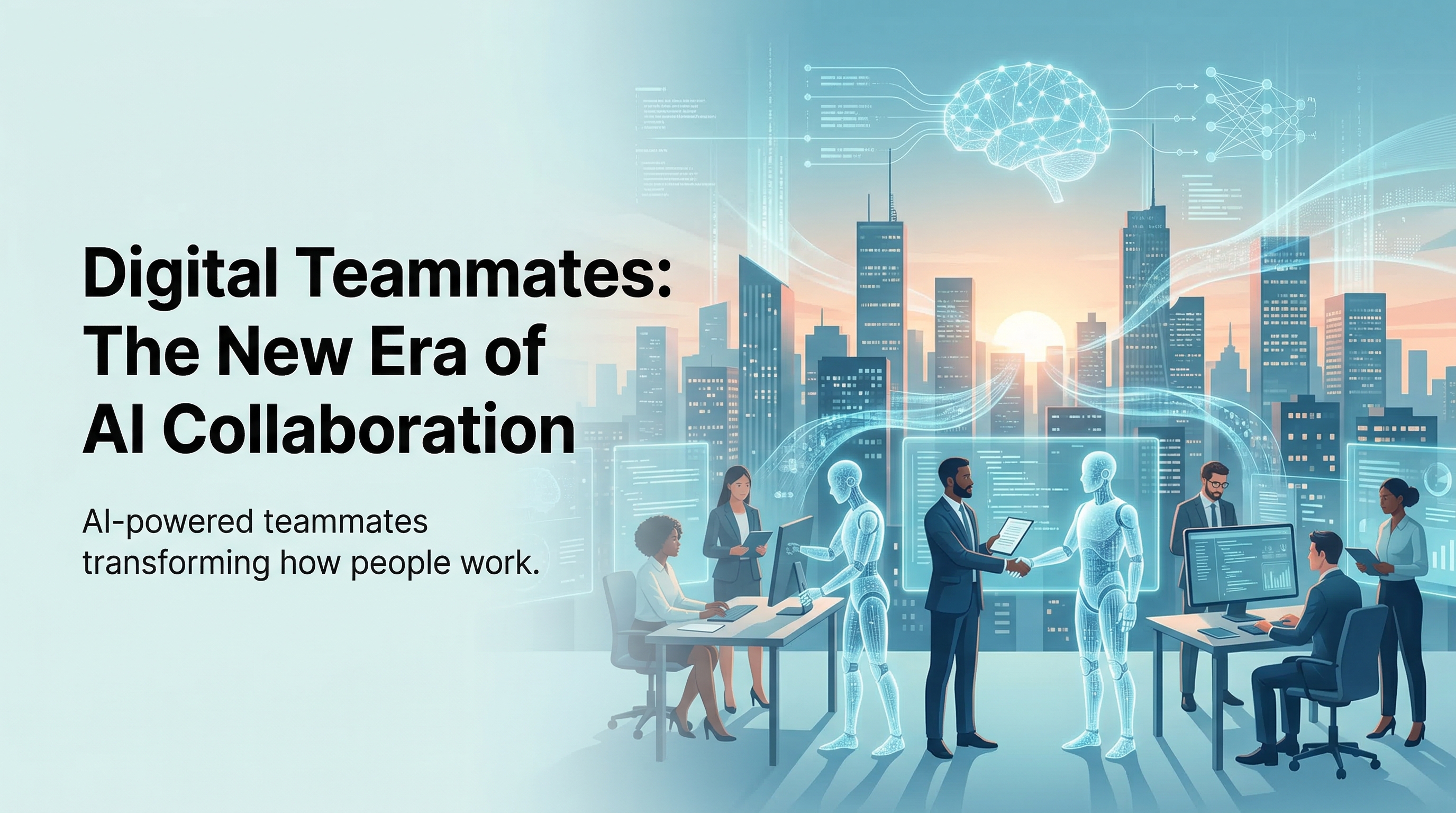
The Digital Teammate Revolution: Changing How We Work
Digital Teammates are no longer a futuristic concept—they are rapidly becoming essential members of modern organizations. According to The Pulse Blog, these AI-powered collaborators are designed to augment, not replace, human effort. By absorbing repetitive tasks, Digital Teammates enable professionals to focus on judgment, decision-making, and relationship-building. Real-world case studies abound: a logistics company saw a 47% reduction in operational workload, while an energy firm automated compliance reporting, driving dramatic efficiency gains.
Thought leaders across the industry emphasize the importance of treating AI as a team member. As highlighted in a recent LinkedIn article, the shift from AI as a mere tool to a collaborative teammate is redefining organizational culture. Teams empowered by Digital Teammates are more agile, productive, and innovative, with companies reporting measurable gains in productivity and job satisfaction. The key is a collaborative mindset—one that invests in upskilling, transparent governance, and a culture of partnership between humans and AI.
Why Digital Teammates Matter: Business Impact and the Path Forward
The rise of Digital Teammates marks a profound shift in how businesses think about talent, technology, and value creation. Far from automating people out of jobs, Digital Teammates act as “workforce multipliers,” enabling organizations to scale impact and empower employees at every level. For example, Gainsight’s customer success leaders used AI teammates to scale their book of business by 40%, reducing stress and unlocking new avenues for strategic work (The Pulse Blog).
Industry reports, such as the 2025 Wharton AI Adoption Report, show that over 80% of enterprise leaders now use generative AI weekly, with Digital Teammates woven into daily workflows. The most effective organizations treat AI as a partner, investing in employee training and ethical guardrails. This approach not only drives ROI but preserves the humanity of work by emphasizing judgment, escalation, and collaboration.
Looking ahead, automation platforms such as CloneForce are leading the way, offering solutions that integrate seamlessly with human workflows. By leveraging platforms like CloneForce, businesses can accelerate AI adoption, drive measurable ROI, and future-proof their workforce for the agentic era of AI.
The outlook is clear: Digital Teammates are here to stay, and organizations that invest in people, process, and trust will lead the next wave of AI-powered success.


